

Many collectors buy coins that look promising but hold little long-term value. These pieces seem interesting at first glance, often appear old or visually attractive, and come with strong claims from sellers. Yet the market shows a different picture. Demand stays low, supply remains high, and resale performance weakens once the excitement fades.
Of course, you can rely on modern tools to check the basics, like metal, weight, and basic parameters through a coin evaluator, but these factors rarely determine real investment strength. Price stability depends on collector demand, population levels, and long-term liquidity. A coin with a large surviving pool or limited interest cannot grow, even if it appears “rare” in advertisements.
Here you can find some of the most overrated coins on the U.S. market. Each example looks appealing to beginners but performs poorly when tested against actual demand. Understanding these patterns helps collectors avoid weak purchases and focus on material with predictable behavior.
Why Some Coins Become Overrated
Overrated coins share a set of structural weaknesses. They appear attractive on the surface, yet deeper analysis shows why they struggle to retain price.
- High original production
Large mintages create a massive long-term supply. Even if millions disappear, enough remain for decades of collecting. Abundant material keeps prices flat.
- Widespread storage in rolls, bags, and household boxes
Many so-called “rare” coins were saved intentionally during release. As a result, thousands of high-grade examples exist today. This removes scarcity from the market.
- Marketing-driven expectations
Some coins gain popularity through hype rather than collector interest. The narrative elevates prices temporarily, but the market corrects itself later.
- Misunderstood rarity
Beginners often confuse age with scarcity. Older coins may be plentiful, while newer issues can be legitimately rare. Misunderstanding this relationship fuels overvaluation.
- Dependence on metal content
Coins valued primarily for melt price behave like bullion, not collectibles. When metal prices fall, premiums collapse.
- Misinformation from sellers
Listings often exaggerate scarcity or use misleading language. Without accurate references, new collectors form incorrect assumptions about value.

The Seven Most Overrated Coins
Common 1976 Bicentennial Quarters (Clad)
Bicentennial quarters attract attention because of the special reverse, but the clad circulation issues remain some of the most overrated modern coins. More than 1.6 billion were minted. Most survived in excellent condition because people saved them as souvenirs. The supply across the country is overwhelming, and collector demand is modest.
Why it is a poor investment:
- Extremely high survival rate
- No significant premium in circulated or uncirculated grades
- Easy to find in pocket change and bulk lots
- Limited long-term growth
The design makes the coin interesting, but the market shows no shortage. As a result, resale value stays low.
Wheat Cents from the 1940s and 1950s (Common Dates)
Wheat cents evoke nostalgia and appear “old,” which misleads many beginners. However, dates from the 1940s and 1950s were produced in massive quantities. Millions were saved in jars and rolls. High-grade examples remain widely available today.
Why it is a poor investment:
- Huge accumulated supply
- Weak demand for common dates
- Premiums are rare, even in higher circulated grades
- The market is saturated with bulk lots
These coins hold sentimental value but rarely financial value. Only a few early or low-mintage dates behave differently; the rest stay inexpensive.
State Quarters (Common Circulation Strikes)
State Quarters attracted unprecedented public attention between 1999 and 2008. People hoarded them in buckets, folders, and mint sets. As a result, circulation strikes are so common that collectors can build full sets at almost no cost.
Why it is a poor investment:
- Billions minted
- Massive hoarding from the start
- No scarcity in any state or mintmark
- Zero premium in typical grades
State Quarters are excellent educational pieces, but function poorly as investments.
Eisenhower Dollars (Most 1971–1978 Issues)
Eisenhower Dollars look impressive due to their size. Many beginners assume a large coin must be valuable. Yet most Ike Dollars saw limited circulation and were stored in bags and rolls. Few collectors pursue the series, and demand stays narrow.
Why it is a poor investment:
- Weak collector base
- Abundant supply in high grades
- Minimal premium unless a special variety
- Heavy weight creates shipping and handling issues
Even attractive examples often sell below expectations.
1965–1970 Kennedy Halves (40% Silver)
These coins appeal to new buyers because they contain silver. The 40% composition creates the illusion of rarity. In practice, the series is tied directly to melt value, with very little collector demand for circulated examples.
Why it is a poor investment:
- Prices follow the silver spot value
- Limited numismatic interest
- Very high survival in rolls and bags
- Almost no premium above melt
When silver declines, these coins decline with it.
Most Modern Commemorative Silver Dollars (Post-1982)
Modern commemoratives have attractive packaging and strong initial demand, but long-term performance remains weak. Many issues were purchased as gifts or stored in original cases, which kept survival rates extremely high.
Why it is a poor investment:
- Oversupply in Mint State
- Weak resale market compared to the issue price
- Few series with enduring collector momentum
- High entry price relative to actual value
Long-term charts show consistent underperformance for most issues.
Buffalo Nickels with Heavy Wear (Common Dates)
Buffalo Nickels attract attention because of their iconic design. Well-worn examples seem “old” and “historic,” yet heavily circulated common-date pieces hold little monetary value. The market favors higher grades where details remain visible.
Why it is a poor investment:
- Heavy wear erases key design features
- Little demand for low-grade common dates
- Abundant supply in bulk lots
- Only high-grade or key dates show strong premiums
These coins teach grading but rarely serve as good purchases.
What These Coins Have in Common: Structural Weaknesses
Overrated coins share consistent weaknesses that limit performance. These patterns appear across multiple decades and series:
- High survival rates: Collectors saved these coins in rolls, bags, and sets, creating an excess of material in high condition.
- Limited collector demand: Many series attract casual interest but not consistent long-term pursuit.
- Weak scarcity: Even if a coin looks unique, thousands of similar examples exist.
- Price driven by hype: Coins promoted through advertisements rarely retain early premiums.
- Hard to resell: Buyers prefer coins with clear rarity, not mass-produced material.
These characteristics explain why certain coins underperform despite a strong superficial appeal.
How to Recognize Overrated Coins Before Buying
The good news is that the collectors can avoid weak purchases by reviewing several indicators. A coin appraisal app helps compare typical ranges and market patterns, but manual inspection is still required.
- Compare the mintage with the actual market supply. Many overrated coins were saved in bulk, so the real availability is far higher than the production number suggests.
- Check how often the coin appears in trade. If large groups of the same date and grade appear regularly, long-term scarcity is unlikely.
- Review certified population data. A high count of MS and AU examples means the coin is common in strong condition and will not support premiums.
- Study real sales, not listings. Recorded auction results show actual buyer behavior, while listings often reflect inflated expectations.
- Compare price levels across grades. If prices stay almost flat from VF to AU, the coin lacks strong collector demand.
- Inspect the surface carefully. Cleaned or altered coins often appear in overrated groups; they lose value quickly and indicate weak market interest.
- Verify type and variety with a structured tool. Coin ID Scanner helps confirm basic parameters and reduces confusion between similar issues.
Following this sequence makes weak coins easier to identify before money is spent.
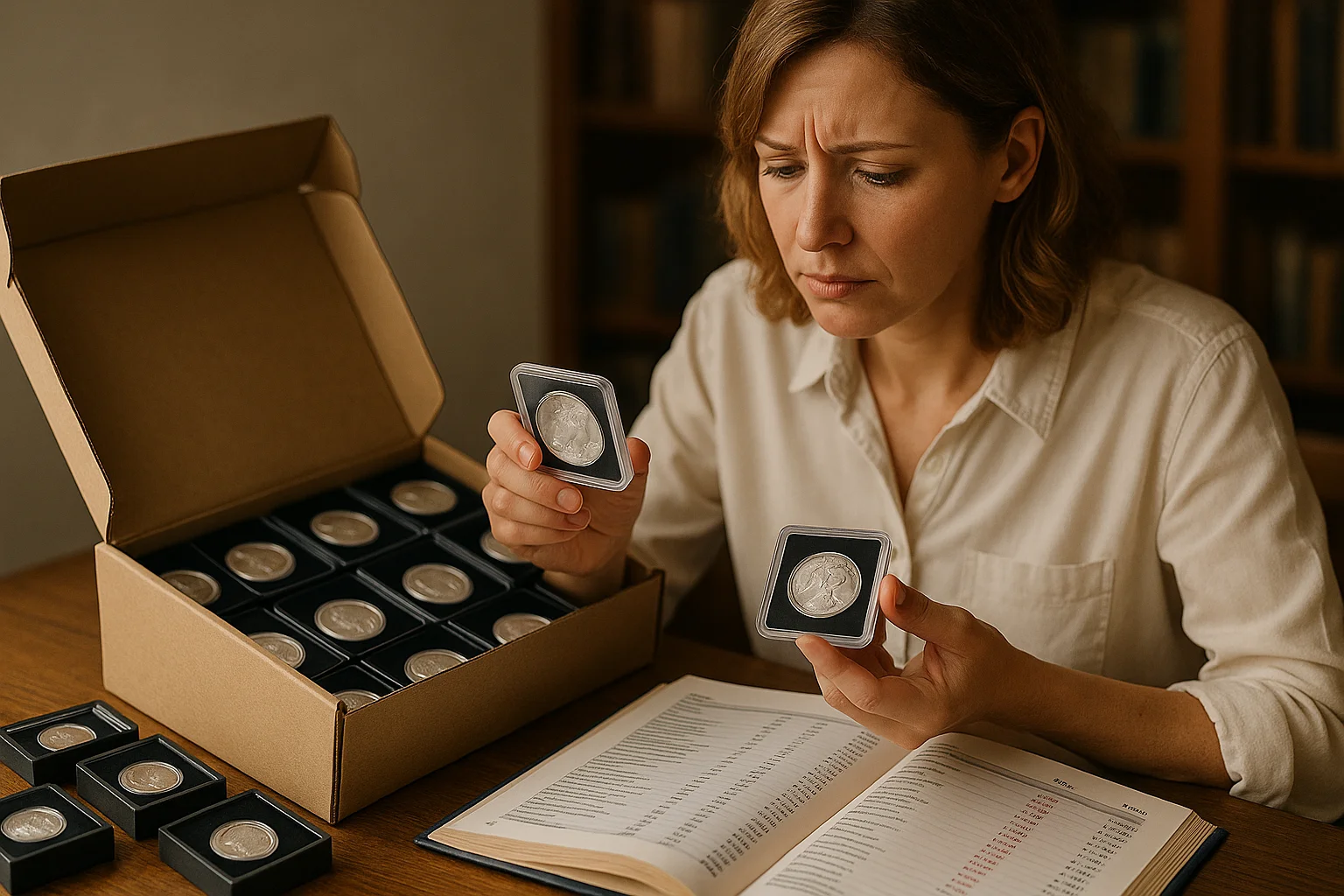
A Straightforward Model for Identifying Poor Investments
Many overrated coins share the same structural issues, which makes their market behavior predictable. A coin becomes a poor purchase when strong survival in high grades meets low collector interest and no real scarcity in the series. Price depends only on metal value or short-term enthusiasm, not long-term demand.
This pattern appears clearly with most 1971–1978 Eisenhower Dollars: large quantities remain in MS condition, the collector base is narrow, and premiums stay flat across grades. These coins look appealing due to size and design, but the market offers more supply than it can absorb, so price growth remains limited.
Closing Notes: How to Build a Stronger Strategy
Strong decisions come from checking real demand, survival levels, and price history. Overrated coins fail because they are common, easy to replace, and lack long-term interest. Review sales data, compare grade distributions, and focus on series with proven collector activity. What is more, you can try the coin worth app to get realistic expectations, but the main factor is a wise choice. When each purchase follows clear criteria, weak material disappears from your buying list automatically.