

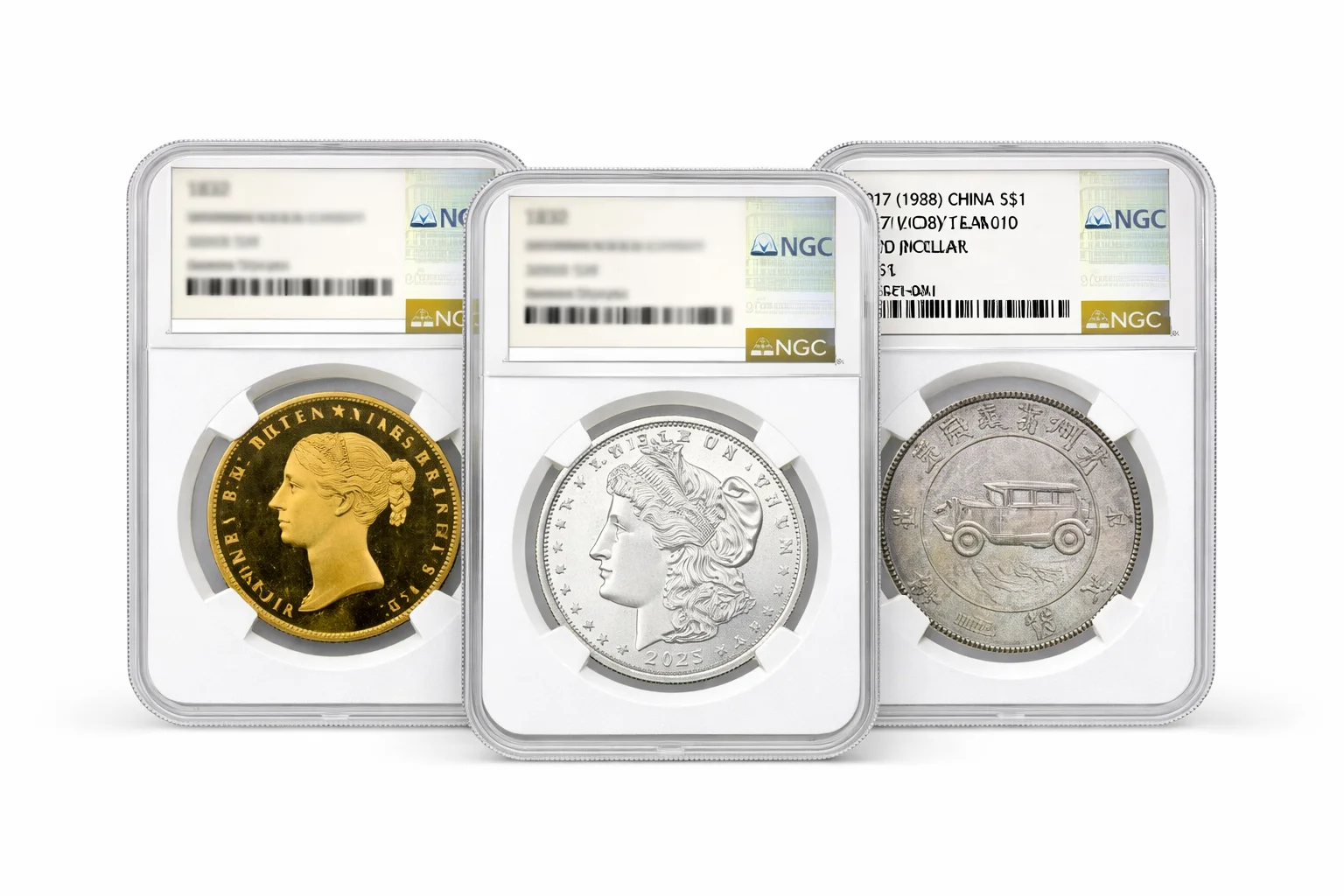
NGC Verify is one of the first tools many collectors open before buying a slabbed coin. That makes sense. A certified holder can look safe at first glance, but the label, the slab, the images, and the record still need to match. This is where the tool becomes useful. It is not just a cert-number lookup. It is a practical way to compare the slab in hand with the information in NGC’s own system.
What NGC Verify Is
NGC Verify is the company’s official certification verification tool. It is built to help collectors confirm a coin’s NGC description and grade and, in many cases, compare the coin to images stored by NGC. NGC also presents it as part of its anti-counterfeit and anti-tampering workflow. That is the right way to read it. The tool is not there only for record-keeping. It is there to help collectors check whether the slab, the label, and the coin still agree with the certification record.
Collectors use it for several reasons:
- To confirm the coin description
- To confirm the grade
- To compare images
- To review census context
- To get a starting price reference for many US coins
That mix makes the tool broader than many beginners expect.
What the Tool Can Show
The strongest way to understand NGC Verify is to break the record into parts.
| Data point | Why it matters |
| Coin description | confirms type, date, mint, and attribution |
| Grade | checks whether the slab label matches the record |
| Certification number | ties the holder to the database entry |
| Images | helps compare the actual coin to the archived coin |
| Census data | shows population context |
| Price Guide | gives a starting retail reference for many US coins |
Collectors rarely use just one of these fields. They use them together. A cert match without image comparison is weaker than a cert match with image comparison. A grade match without checking the holder is weaker than a grade match plus holder inspection. That is why Verify works best as a combined check, not a single-step answer.
How Collectors Access NGC Verify
There are two practical entry points. The first is manual lookup. A collector enters the NGC certification number and selects the grade. The second is mobile scanning. In the NGC app, the barcode on the label can be scanned with a phone camera, which is faster when the slab is already in front of you.
The app then shows the coin’s description and grade and can also display census data, price guide values for US coins, and images for nearly 20 million NGC-certified coins.
That grade-selection step on the website confuses many users. NGC explains the reason clearly. The extra step is there to reduce database crawling and improve data security. It is not a design mistake. It is a deliberate protection feature.
Why the Cert Number Alone Is Not Enough
This is the most important habit in slab checking. A matching cert number is only the beginning. It is not the end of the check.
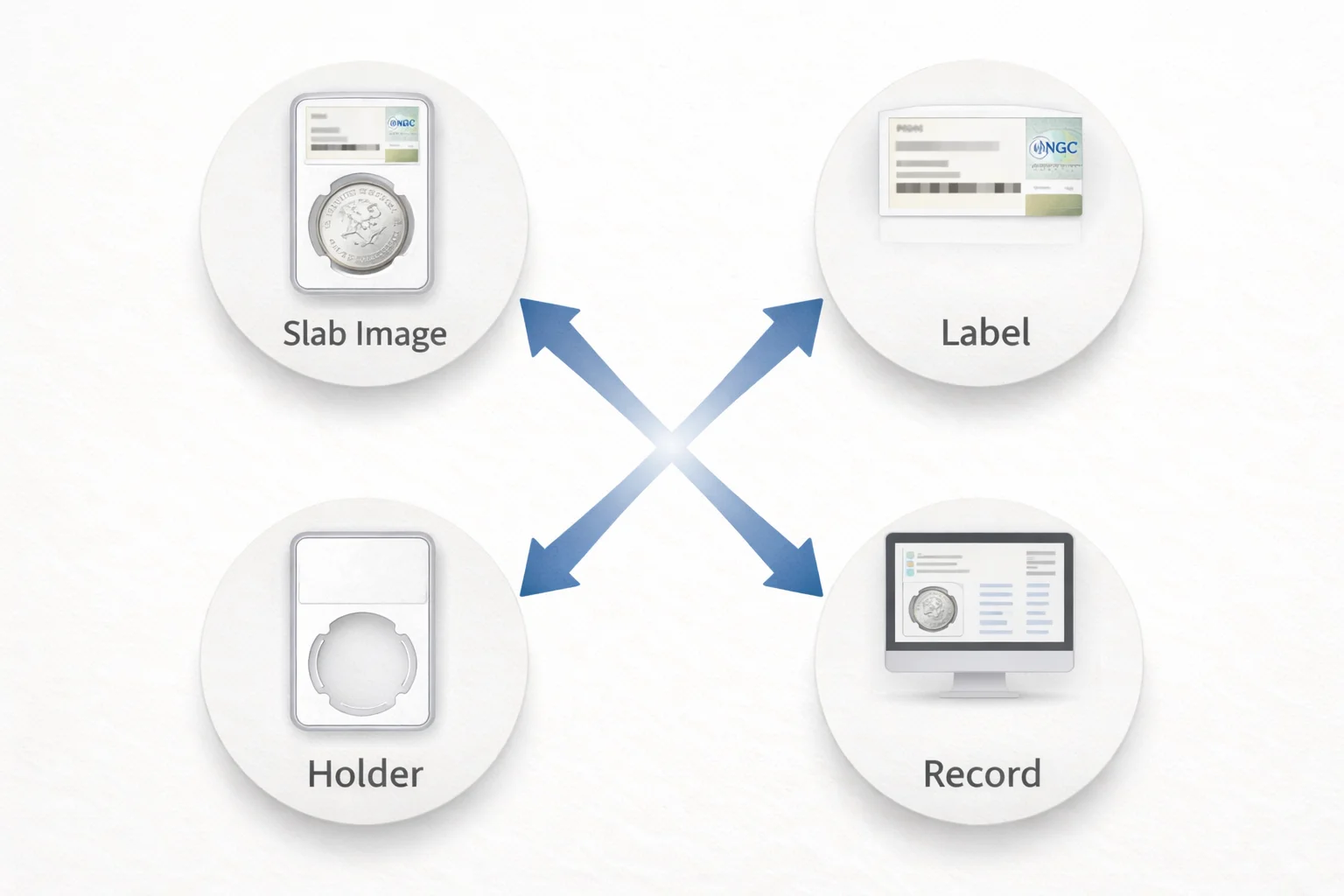
NGC’s Security Center tells collectors to compare the coin, the label, and the holder to the Verify record. That instruction matters because a fraudulent or tampered holder can still use a real certification number. In other words, the number can belong to a genuine record even if the slab in front of you is not right. The stronger method is simple: match the database entry, then match the images, then match the holder.
A useful checklist looks like this:
- Does the description match the slab label
- Does the grade match the slab label
- Do the images match the coin in hand
- Does the holder style look correct
- Do the security elements look normal
Collectors who skip those steps tend to overtrust the cert number. That is where mistakes begin.
Images, Labels, and Holder Features
NGC does not rely on database text alone. It also relies on holder security and image comparison. The company describes several physical security elements. The holder uses ultrasonic sealing.
The hologram on the back includes multiple security features. The label includes a UV watermark, holographic foil, and microprinting. On newer holders, the hologram also carries a unique QR code and an eight-digit security code.
That creates a layered system. The slab is protected physically, but the buyer is still expected to compare the physical object to the digital record.
| Checkpoint | What it helps catch |
| Label text | wrong description or altered details |
| Coin images | coin mismatch |
| Holder style | fake shell or wrong generation |
| Security features | tampering risk |
| QR code or barcode | faster direct lookup |
This is why slab verification works best by hand. The tool gives the record. The collector still has to compare what is on the screen to what is inside the holder.
Alert Flags That Matter
One of the strongest parts of NGC Verify is the alert system. The warning messages are not cosmetic. They change how the slab should be handled.
| Alert | Practical meaning |
| Contact NGC Customer Service | The record needs clarification |
| Possible Counterfeit Holder | NGC has seen a fake or tampered holder using that cert number |
| Mechanical Error | The label has a typographical or mechanical mistake |
| Deleted | The record was removed from the Census, though errors can happen |
NGC explains each of these directly in its FAQ. “Possible Counterfeit Holder” is the most serious for buyers. It means NGC has already seen a counterfeit or tampered holder using that number.
“Mechanical Error” means the label itself needs correction. “Deleted” usually means the coin was removed from the Census, though NGC notes that some deletions happen in error. “Contact NGC Customer Service” is broader, but it still means the collector should stop and ask questions.
For a buyer, the rule is simple. If there is a warning, do not treat the slab like a normal clean match. Slow down. Recheck everything. If needed, contact NGC.
What “No Match Was Found” Usually Means
Collectors often assume that “No match was found” automatically means the slab is fake. NGC’s own FAQ gives a more measured answer. The most common causes are:
- An invalid certification number
- The wrong grade was selected
- The coin has not yet been shipped by NGC, so it is not searchable yet
That list is useful because it removes one common mistake. A failed search is a red flag, but not all red flags mean fraud. The first response should be to recheck the cert number and the grade. If the slab is new or recently certified, it may simply not be available in the tool yet. If the match still fails, that is the point to contact NGC Customer Service.
Why Some Coins Have No Images
Collectors notice this quickly. Some records show photos. Some do not. NGC explains the split. The company has imaged virtually all non-bulk submissions since October 2008.
If images are missing, the coin was likely graded before that date, or it was part of a bulk submission that was not imaged. NGC also notes that such coins can be submitted for ReHolder service to be placed in a new holder and imaged.
This point matters because images make the verification process much stronger. A cert number and a text record can still leave room for doubt. Images narrow that gap. That is one reason NGC highlights archived images so heavily in its security material. It turns the tool into more than a label lookup. It becomes a real side-by-side comparison system.
Census and Price Guide: Useful, but Not Final Answers
NGC Verify can also connect collectors to two other resources: Census data and the NGC Price Guide. Both are useful. Neither should be treated as a final answer.
Census data gives context. It shows how many coins NGC has certified in a type and grade. That helps a collector judge whether a certified level is broad or thin. It does not guarantee market value. Population and price are related, but they are not the same thing. Some common coins sell strongly because demand is high. Some scarcer coins stay soft because demand is narrow.
The NGC Price Guide is also easy to misuse. NGC states that the guide shows average dealer retail prices based on documented transactions and other information reported by collectors, dealers, and auction houses for NGC-certified coins.
The company also says the prices are only one measure among many, that they are updated only from time to time, and that they do not reflect short-term swings. NGC explicitly says the guide should not replace due diligence.
| Output | Good for | Not enough for |
| Census | rarity context | exact market value |
| Price Guide | starting retail reference | final sale price |
| Cert match | first verification step | full authenticity decision |
| Images | coin comparison | full grading decision |
This is the right way to read the tool. It organizes a collector’s next steps. It does not remove the need for those steps.
A Practical Slab-Checking Workflow
Collectors need a routine more than they need theory. The routine can stay short.
A clean workflow looks like this:
- Open the Verify record
- Confirm the cert number and grade
- Compare the description to the label
- Compare the archived images to the coin
- Inspect the holder and security features
- Check for alerts
- Review Census and price only after the slab check is complete
That order matters. Price should not come first. Buyers who start with value too early tend to miss the physical comparison stage. That is exactly where many slab problems show up.
By the way, the coin checker app can still be useful in the field, especially when sorting mixed material or checking raw coins quickly. For an NGC slab, though, the official Verify workflow remains the stronger first line because it ties directly to NGC’s own certification record.
Other Tools to Help Collectors
NGC Verify is built for NGC-certified holders. That is its lane. Collectors often need another lane, too. Raw coins, unsorted groups, and mixed boxes require a different kind of first pass.
This is where a free coin value checker app is necessary. The Coin ID Scanner app is useful when the coin is not slabbed or when the goal is quick sorting before deeper research.
The Coin ID Scanner can identify coins from a photo, provide information about origin, rarity, design, and specifications, support value lookup, and help manage collections. That is a different workflow from NGC Verify, but it fits well beside it. One tool checks the slab record. The other helps organize raw material and early identification.
The distinction is practical:
- NGC Verify checks an NGC-certified holder against NGC’s record
- Coin ID Scanner helps identify and sort coins outside the slab workflow
That keeps the roles clear. One is a certification check. The other is a broader collector helper.
Who This Tool Helps Most
NGC Verify is useful for more than one kind of collector. It helps:
- Buyers of slabbed coins
- Sellers, checking their own holders before listing
- Collectors, sorting inherited certified material
- Newer hobbyists who assume a cert number alone is enough
- Advanced buyers, comparing images before making a stronger purchase
That breadth is one reason the tool matters. It works as a basic safety step for beginners and a fast confirmation step for experienced collectors. The key difference is not experience level. It is whether the user treats the tool as a shortcut or as part of a real checking process.
FAQ
Does NGC Verify prove that a slab is real by itself?
No. It is strongest when the record, the images, the label, and the holder are all compared together.
Why does the website ask for the grade, too?
NGC says that the step helps prevent database crawling and improves data security.
What does “Possible Counterfeit Holder” mean?
It means NGC has seen a counterfeit or tampered holder using that certification number.
Why are there no photos for some coins?
NGC says most non-bulk submissions since October 2008 were imaged. Older or bulk submissions may not have images.
Can Census data tell me if the coin is valuable?
Not by itself. Census gives rarity context, not a final market answer.
Is the Price Guide the same as what the coin will sell for?
No. NGC says the guide is an average dealer retail reference and should not replace due diligence.
Conclusion
NGC Verify helps collectors check more than a number. It helps them check the relationship between the cert record, the label, the images, and the holder. That is why it remains useful. The strongest habit is simple: verify the record, compare the images, inspect the slab, then think about price. Used that way, the tool does real work.